

Personal Loan Finance Online :: News
SHARE

Share this news item!

Businesses Accelerate EV and Battery Finance Amid Fuel Volatility

Why rising diesel costs are changing the maths for Australian fleets

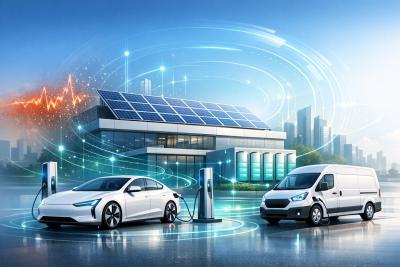
Businesses Accelerate EV and Battery Finance Amid Fuel Volatility?w=400

The information on this website is general in nature and does not take into account your objectives, financial situation, or needs. Consider seeking personal advice from a licensed adviser before acting on any information.

Australian businesses are increasingly treating electrification as a cost-control strategy, not just an environmental decision.
Recent reporting on bank lending data shows a sharp rise in finance for green equipment, with NAB saying its green equipment loan uptake between March and May 2026 was almost double the level recorded over the same period last year.

The key driver is fuel volatility. As diesel and petrol prices remain exposed to global supply shocks, many operators are looking for ways to reduce their reliance on imported fuels. For some businesses, that means financing electric vehicles for staff or delivery fleets. For others, it means pairing EVs with solar, batteries or electric machinery to reduce ongoing operating costs.

Importantly for EV Loan Hub readers, the story highlights a shift in how borrowers may assess an EV finance options. The cheapest vehicle on the day is not always the lowest-cost option over the life of ownership. A business weighing up a diesel van against an electric alternative may need to compare fuel savings, servicing costs, charging setup, depreciation, tax treatment and interest costs before deciding what is genuinely affordable.

The construction and manufacturing examples are especially relevant for small and medium businesses. Battery-powered cranes, rooftop solar and EV fleets are no longer fringe ideas for large corporates only. They are becoming practical tools for reducing exposure to fuel bills, particularly where vehicles return to a depot and can be charged on-site. That can make repayment planning more predictable, although the upfront purchase price and infrastructure costs still need careful attention.

For households and sole traders, the lesson is similar: do not assess an EV loan in isolation from running costs. A lower interest rate is valuable, but so is a realistic view of charging access, weekly kilometres, insurance, servicing and resale value. Before committing, buyers should model repayments across several loan terms and stress-test the result against their monthly budget.

This development also extends the recent trend of fuel price pressure pushing more Australians towards EVs. The fresh angle is that business borrowers are now acting at scale, and lenders are responding with products designed for cleaner vehicles and equipment. That could increase competition in green lending over time, but borrowers should still check fees, eligibility rules, balloon payments and early payout conditions.

For anyone considering a new or used EV, the takeaway is clear: compare the total cost, not just the sticker price. Finance can help bring forward the switch, but the best outcome comes from matching the loan, vehicle and charging setup to real-world usage.

Published:Sunday, 21st Jun 2026
Author: Paige Estritori

Please Note: We do not endorse any specific products or companies. Some content is sourced from third parties, including press releases, and may not be independently verified for accuracy or completeness.

Share this news item:

Rate this article

0 Comments

No comments yet. Be the first to share your thoughts.

Finance News

Xpeng X9 Signals a New Electric Family Mover for Australia
21 Jun 2026: Paige Estritori
Australia’s electric vehicle market is broadening beyond compact SUVs and sedans, with Xpeng preparing to bring its X9 electric people mover closer to local showrooms. The brand, which entered Australia with the G6 electric SUV in 2024, now has a local web presence for the X9 and the model has already appeared in Australian approval records, suggesting a launch is moving from speculation to serious preparation. - read more
Leapmotor C10 Long Range Sharpens Australia’s EV Value Equation
21 Jun 2026: Paige Estritori
Leapmotor has given Australian electric SUV shoppers a timely value update, confirming a revised MY26 C10 battery-electric range that focuses on longer range, quicker charging and a simpler line-up. For buyers weighing up an electric car loan, the headline is straightforward: the updated C10 Design Long Range keeps its $49,888 price before on-road costs while adding meaningful hardware improvements. - read more
Businesses Accelerate EV and Battery Finance Amid Fuel Volatility
21 Jun 2026: Paige Estritori
Australian businesses are increasingly treating electrification as a cost-control strategy, not just an environmental decision. Recent reporting on bank lending data shows a sharp rise in finance for green equipment, with NAB saying its green equipment loan uptake between March and May 2026 was almost double the level recorded over the same period last year. - read more
RBA Holds Rates, But Homeowners Should Stay Ready
21 Jun 2026: Paige Estritori
Australian mortgage holders received a brief reprieve on 16 June 2026, when the Reserve Bank of Australia left the cash rate unchanged at 4.35%. After three consecutive increases earlier this year, the pause means many variable-rate borrowers will not face an automatic repayment jump from this particular meeting. However, the message from the central bank was cautious rather than celebratory: inflation remains above target, and further tightening has not been ruled out. - read more


Personal Loans Articles

Are Unsecured Loans the Safer Choice? Weighing Your Options
Unsecured loans are a type of lending product that allow borrowers to obtain funds without the need to offer collateral. This means that the loan is not tied to any physical asset, such as a house or car, which can be seized by the lender if the borrower defaults. - read more
Your Guide to Debt Consolidation Loans in Australia
Debt consolidation loans are a financial strategy many Australians use to manage their debt more effectively. Essentially, they allow you to combine multiple debts, such as credit cards, personal loans, and other liabilities, into a single loan with one monthly payment. This can make it easier to manage your finances and could potentially reduce the amount of interest you pay over time. - read more
Refinancing Your Loan: Is It the Right Move for You?
Loan refinancing is the process of replacing an existing loan with a new loan, usually with better terms. This financial strategy can be applied to a range of loans including mortgages, car loans, and personal loans. By refinancing, borrowers aim to achieve a more favourable interest rate, adjust the loan term, or consolidate debts. - read more
Unlock Better Loan Options: Quick Fixes for Your Credit Score
Your credit score plays a crucial role in your financial journey, especially when it comes to obtaining loans in Australia. It's essentially a numerical representation of your creditworthiness and helps lenders assess the risk of lending you money. - read more


Free Assessment

Loan Amount:
Postcode:

All quotes are provided obligation-free by a participating broker from our national referral partner network. We respect your Privacy.


Knowledgebase
Private Mortgage Insurance (PMI):
A type of insurance that a borrower might be required to purchase as a condition of a conventional mortgage loan, if the down payment is less than 20% of the property value.